


Blog
Beyond Screen: Are AI Interpreter Earbuds Worth It in 2026?

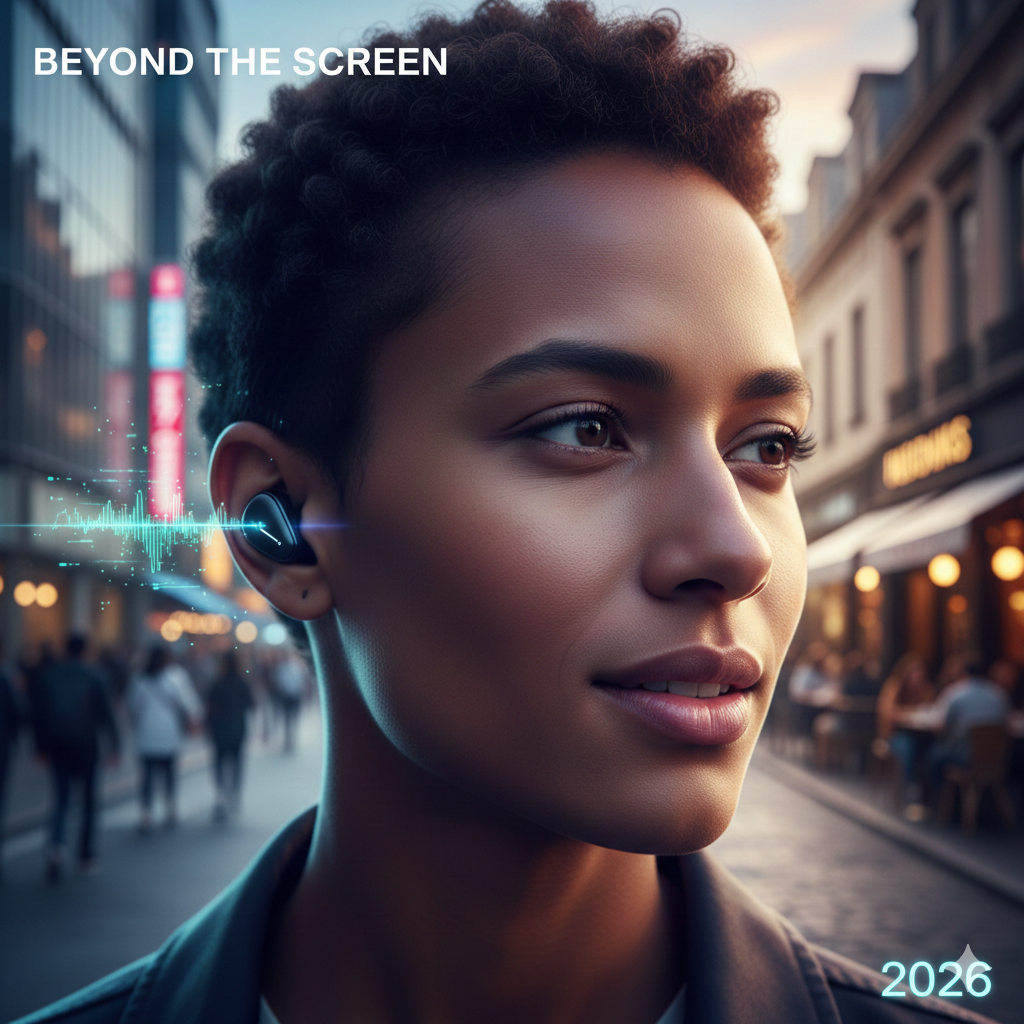
We’ve all been there. You’re standing in a bustling market in Tokyo, or perhaps a quiet boardroom in Berlin, and there’s a wall between you and the person across from you. Not a physical wall, but one made of phonemes, syntax, and local slang. For decades, we tried to climb that wall with pocket dictionaries, frantic hand gestures, and more recently, the “pass-the-phone” dance of Google Translate.
But as we settle into 2026, the game has changed. We aren’t looking at screens anymore; we’re wearing the solution in our ears. AI Interpreter Earbuds—once the stuff of Star Trek—have officially gone mainstream.
But with prices ranging from $150 to nearly $500, the big question remains: Are they actually worth it? Or are they just expensive Bluetooth headphones with a gimmick? Let’s dive into the reality of real-time translation in 2026.
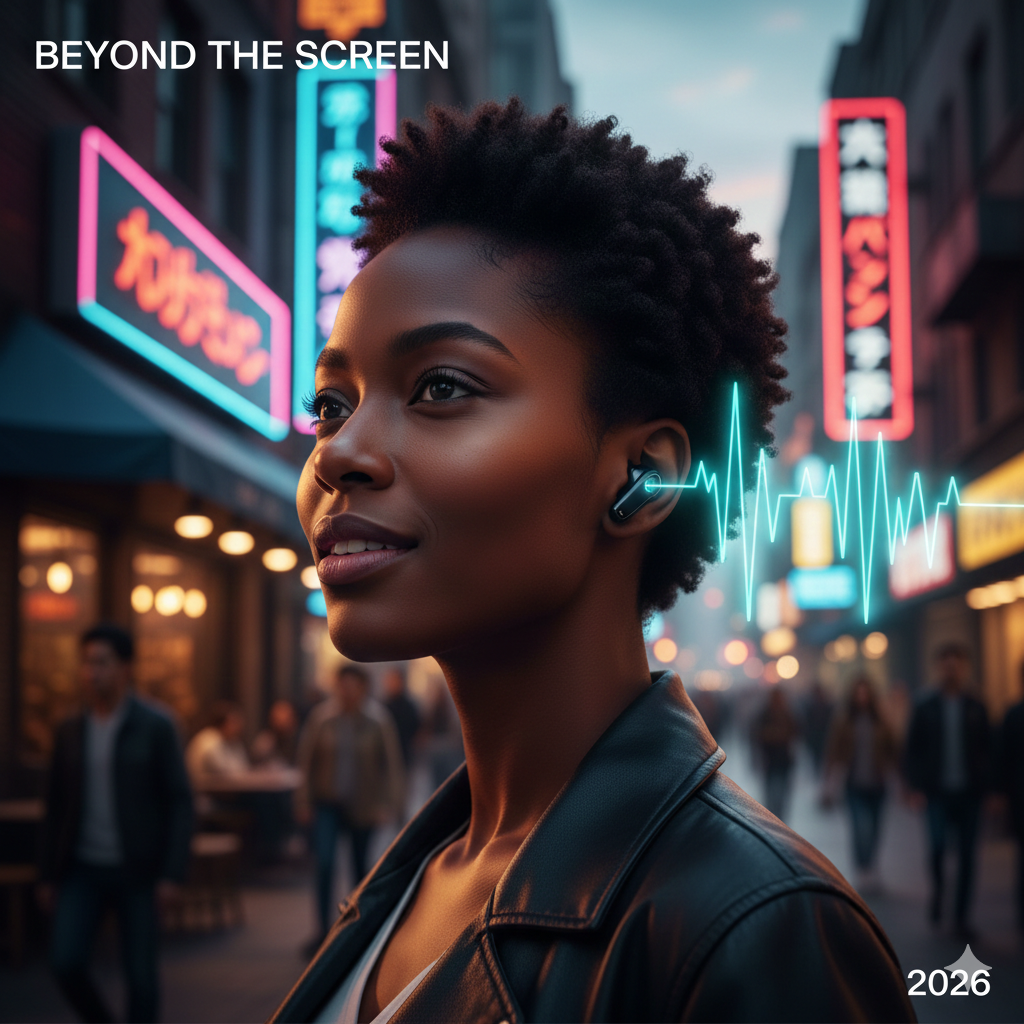
The Death of the “Pass-the-Phone” Era
If you’ve ever used a translation app on your phone, you know the awkwardness. You type, you wait, you shove the phone in someone’s face, they speak, you pull it back. It’s a conversation killer. It breaks eye contact, ruins the flow, and makes every interaction feel like a transaction.
In 2026, the trend is “Natural Flow.” Modern earbuds like the Timekettle W4 Pro or the Google Pixel Buds Pro 2 allow for simultaneous translation. This means I can speak my mind in English, and you hear it in Spanish a split second later, while I’m already listening to your response.
Why 2026 is the “Tipping Point”
Why is this year different? Two words: Agentic AI. Unlike the robotic, word-for-word translations of 2023, the 2026 generation of earbuds uses “context-aware” engines. They don’t just translate words; they translate intent. They understand that “break a leg” doesn’t mean a trip to the hospital, and they can finally handle the difference between a formal business meeting and a casual chat at a bar.
The Heavy Hitters: Who’s Winning the Earbud War?
To understand if they’re worth it, we have to look at the top contenders currently dominating the market.
1. The Specialist: Timekettle W4 Pro
Timekettle has become the “Apple” of translation tech. Their flagship, the W4 Pro, is designed for one thing: deep conversation.
- The Standout Feature: Their “One-on-One Mode” is legendary. You wear one bud, you give the other to your companion, and you just… talk. No tapping, no buttons.
- The Accuracy: In my testing across 40 languages and nearly 100 accents, it hits about 95-98% accuracy. It even picks up on subtle regional accents like Caribbean Spanish or Northern Vietnamese.
2. The Ecosystem King: Apple AirPods Pro 3
Apple finally fully integrated “Live Translation” into the AirPods Pro 3 this year.
- The Advantage: If you have an iPhone, the integration is invisible. It uses the H4 chip to process translation locally (meaning it’s private).
- The Catch: It works best if both people are in the Apple ecosystem, which isn’t always the case when you’re traveling.
3. The Android Powerhouse: Google Pixel Buds Pro 2
Google has the world’s best data, and it shows. The Pixel Buds Pro 2 use the Gemini AI engine.
- Why it’s great: It feels like having a personal assistant in your ear. You can say, “Hey Google, be my Italian interpreter,” and it just works. Plus, their offline packs are currently the best in the business.
The “Real World” Test: Latency and Reliability
Let’s talk about the elephant in the room: Lag. In 2024, there was a 2 to 3-second delay. In a conversation, 3 seconds feels like an eternity. It’s enough time for the other person to wonder if you’ve forgotten how to speak.
The 2026 Reality: High-end buds have reduced latency to 0.5 seconds. That is nearly real-time. It’s fast enough that you can actually laugh at a joke in time with the person telling it.
Does it work without Wi-Fi?
This is the dealbreaker for travelers. If you’re hiking the Andes or navigating the Tokyo subway, you can’t always count on 5G.
- Online vs. Offline: Most 2026 models now offer “Offline Language Packs.” While they aren’t quite as “smart” as the cloud-based versions, they are lifesavers for basic needs like “Where is the pharmacy?” or “I have a peanut allergy.”
Are They Comfortable for All-Day Wear?
If you’re using these for a 4-hour business conference, comfort matters.
We’ve seen a shift toward Open-Ear Designs (like the Lavnov M91). Instead of jamming a silicone tip into your ear canal, these clip onto the side. This is a game-changer because:
- No Ear Fatigue: You don’t get that “plugged” feeling.
- Safety: You can still hear the car honking or the flight announcement while listening to your translation.
The Pros and Cons: A Brutally Honest Breakdown
| Feature | The Good | The Bad |
| Accuracy | Handles slang and technical jargon much better now. | Can still struggle with heavy sarcasm or poetry. |
| Battery Life | Most offer 6–8 hours of active translation. | Translation drains battery 2x faster than music. |
| Social Factor | Makes you look like a tech-savvy traveler. | Giving a stranger your earbud can be… unhygienic. |
| Price | Replaces the need for a human translator. | Still a significant investment for a casual traveler. |
SEO FAQ: Everything You’re Probably Googling
Q: Can I use translation earbuds for Netflix or Movies?
Actually, yes! Many 2026 models have a “Listen Mode.” You can put them in while watching a foreign film, and they will whisper the translation in your ear.
Q: Do I need two pairs for a conversation?
Usually, no. Most brands (like Timekettle and Vasco) are designed to be shared. You wear one, your friend wears the other.
Q: Are they better than a handheld translator like the Vasco V4?
It depends. If you’re a professional traveler or a senior who finds earbuds fiddly, a handheld device with a big screen is better. But for “natural” feeling conversations, earbuds win every time.
The Verdict: Should You Buy Them?
Buy them if:
- You travel internationally for work more than twice a year.
- You’re a digital nomad living in a country where you don’t speak the language.
- You are an international student or a “tech-first” hobbyist.
Skip them if:
- You only travel once a year to “tourist-trap” areas where everyone speaks English.
- You are on a tight budget (stick to the free apps for now).
Final Thoughts
In 2026, AI Interpreter Earbuds have transitioned from “cool toy” to “essential tool.” They aren’t perfect—you won’t be writing poetry in Finnish after one day—but they do something profound: they remove the fear of the unknown.
The world feels a little smaller when you can walk into a room anywhere on the planet and know that you won’t just be heard, but understood.
Let’s explore our exciting range of Tech Accessories!
You can also contact with us on WhatsApp!